Healthcare, Nutrition & Holistic Wellbeing
Supporting older persons to live healthier, safer and more dignified lives within their communities
As people age, health needs often become more complex. Chronic conditions may require continuous management; mobility challenges can make health facilities difficult to reach; inadequate nutrition can weaken already vulnerable households; and social isolation can affect both physical and psychosocial wellbeing.
For many older persons, therefore, the question is not simply whether a health facility exists. It is whether they can access appropriate care, afford it, understand their health needs, receive support at home, obtain adequate nutrition and remain connected to their communities.
Ethel Foundation for the Aged (EFA) approaches older persons’ wellbeing from this broader perspective.
Our Healthcare, Nutrition & Holistic Wellbeing Programme seeks to improve access to affordable, age-friendly healthcare, nutrition, psychosocial support and community-based care for older persons.
From screening to sustained community care
EFA’s health work is designed around the realities older persons encounter in their everyday lives.
Community-Based Eldercare
Formal health services cannot meet every need. Some older persons require support within their homes and communities, particularly where mobility, dependency, poverty or distance creates barriers to accessing services.
EFA works with communities and caregivers to strengthen:
- Community and home-based support
- Caregiver networks
- Identification of emerging health and care needs
- Referral pathways to appropriate services
- Dignified support for older persons within their communities
Medical Camps & Health Screening
Preventive health care is particularly important where older persons may live with undiagnosed or poorly managed non-communicable diseases.
Through community health outreach and medical camps, EFA supports activities including:
- Blood pressure screening
- Diabetes screening
- Basic medical consultation
- Health education
- Identification of health concerns requiring further attention
- Referrals to appropriate health services
These interventions provide an opportunity to reach older persons closer to where they live while identifying health needs that may otherwise remain unattended.
Caregiver Capacity Building
The quality of an older person’s care is often influenced by the knowledge, confidence and resources of the person providing that care.
EFA therefore supports capacity building for caregivers and Community Health Promoters, with emphasis on dignified, responsive and age-sensitive care.
This includes strengthening understanding of older persons’ needs, recognising changes that may require referral, and promoting care that respects autonomy, dignity and participation.
Mental Health & Psychosocial Wellbeing
Healthy ageing is not only physical.
Loneliness, social isolation, bereavement, cognitive decline and reduced participation in community life can significantly affect an older person’s wellbeing.
EFA incorporates psychosocial wellbeing through community engagement, social connection, dementia awareness and support mechanisms that help older persons remain connected to people and communities around them.
Our approach recognises that belonging is also part of wellbeing.
Food Security & Nutrition
An older person’s health cannot be separated from access to adequate and nutritious food.
EFA combines nutrition support with approaches that strengthen household and community capacity to produce and access food. Depending on the intervention context, this may include:
- Food assistance
- Nutrition education
- Community-based food production
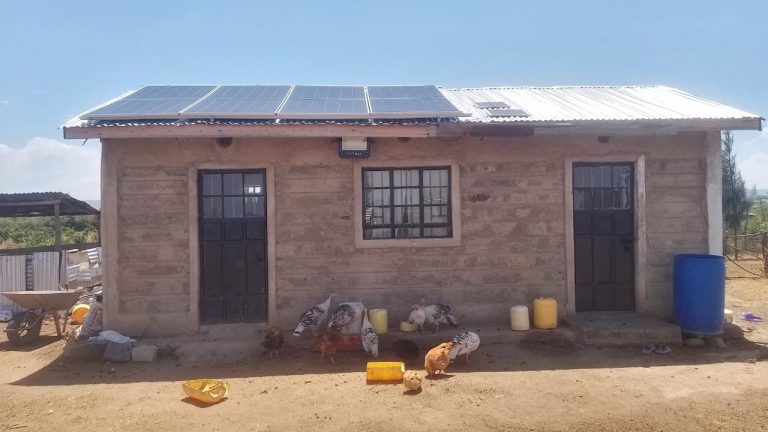
- Poultry and other livelihood-linked food security initiatives
- Strengthening household and community resilience
The objective is not simply to respond to hunger today, but to contribute to greater food security and improved nutritional wellbeing over time.
Older Persons’ Health & Wellness Events
Community health and wellness events create opportunities to bring several forms of support together.
EFA’s approach can include:
health education → screening → consultation → referral → nutrition support → grooming → mobility support → social connection.
These activities also provide an important platform for engaging older persons directly, listening to their concerns and connecting them with available services.
Age-Friendly Services
An available service is not necessarily an accessible service.
Physical mobility, cost, information gaps, social circumstances and the design of services can all influence whether an older person is able to benefit from health and other essential services.
EFA therefore promotes greater attention to age-friendly access—helping reduce practical barriers and strengthening pathways through which older persons can obtain appropriate support.
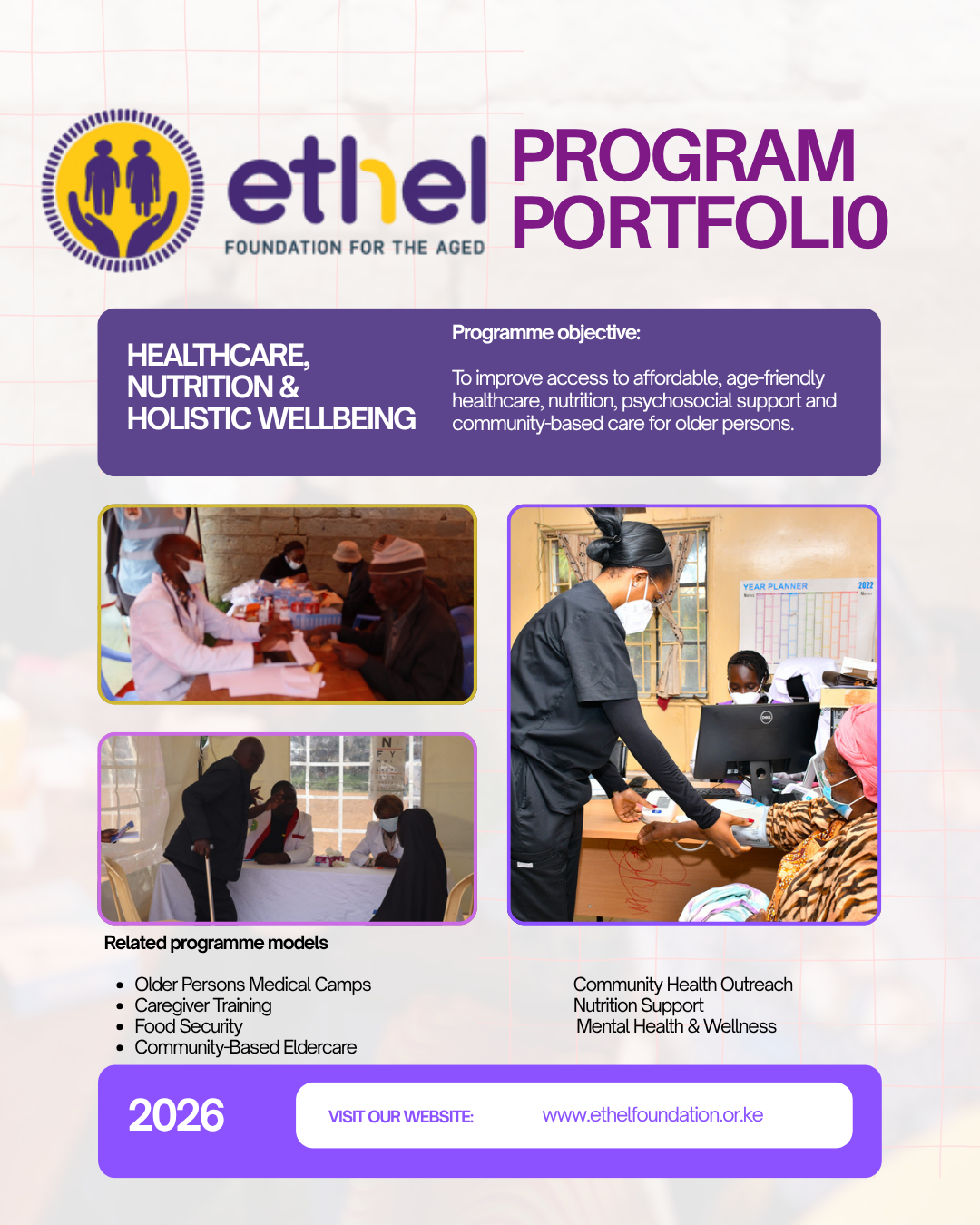
Our programme models
EFA’s Healthcare, Nutrition & Holistic Wellbeing work includes:
- Older Persons Medical Camps
- Community Health Outreach
- Caregiver Training
- Nutrition Support
- Food Security Initiatives
- Mental Health & Wellness
- Community-Based Eldercare
Together, these models reflect EFA’s understanding that ageing well requires more than a single intervention.
It requires healthcare, adequate nutrition, supportive relationships, capable caregivers, responsive communities and services that recognise the dignity of older persons.
Our commitment
EFA works toward a society where older persons can live with dignity, free from neglect and exclusion.
Through this programme, we seek to strengthen not only the health of individual older persons, but also the families, caregivers, communities and systems that influence their wellbeing.
Because caring for older persons is not simply about responding when illness occurs.
It is about creating the conditions in which older people can remain healthy, supported, connected and treated with dignity throughout later life.
Ethel Foundation for the Aged (EFA)
Transforming social values and systems to better respond to the care and support needs of less privileged older persons in society.