The SLOPAK Livelihood Project Schedule and the Power of Peer Gatherings: Empowering Older Persons in Kisumu
In Kisumu, a vibrant hub of Western Kenya’s communities, the SLOPAK (Sustainable Livelihoods for Older Persons and Advocacy in Kenya) project—is transforming how older persons engage in economic self-reliance. A key pillar is the structured weekly group schedule for livelihood training, designed to build skills, foster social bonds, and promote sustainable incomes. This initiative aligns with Kenya’s National Policy on Older Persons (2018) and the African Union’s Protocol to the African Charter on Human and Peoples’ Rights on the Rights of Older Persons in Africa (2021), prioritizing community-based interventions over institutionalization.
The Kisumu Livelihood Project Groups Schedule: A Model of Consistency
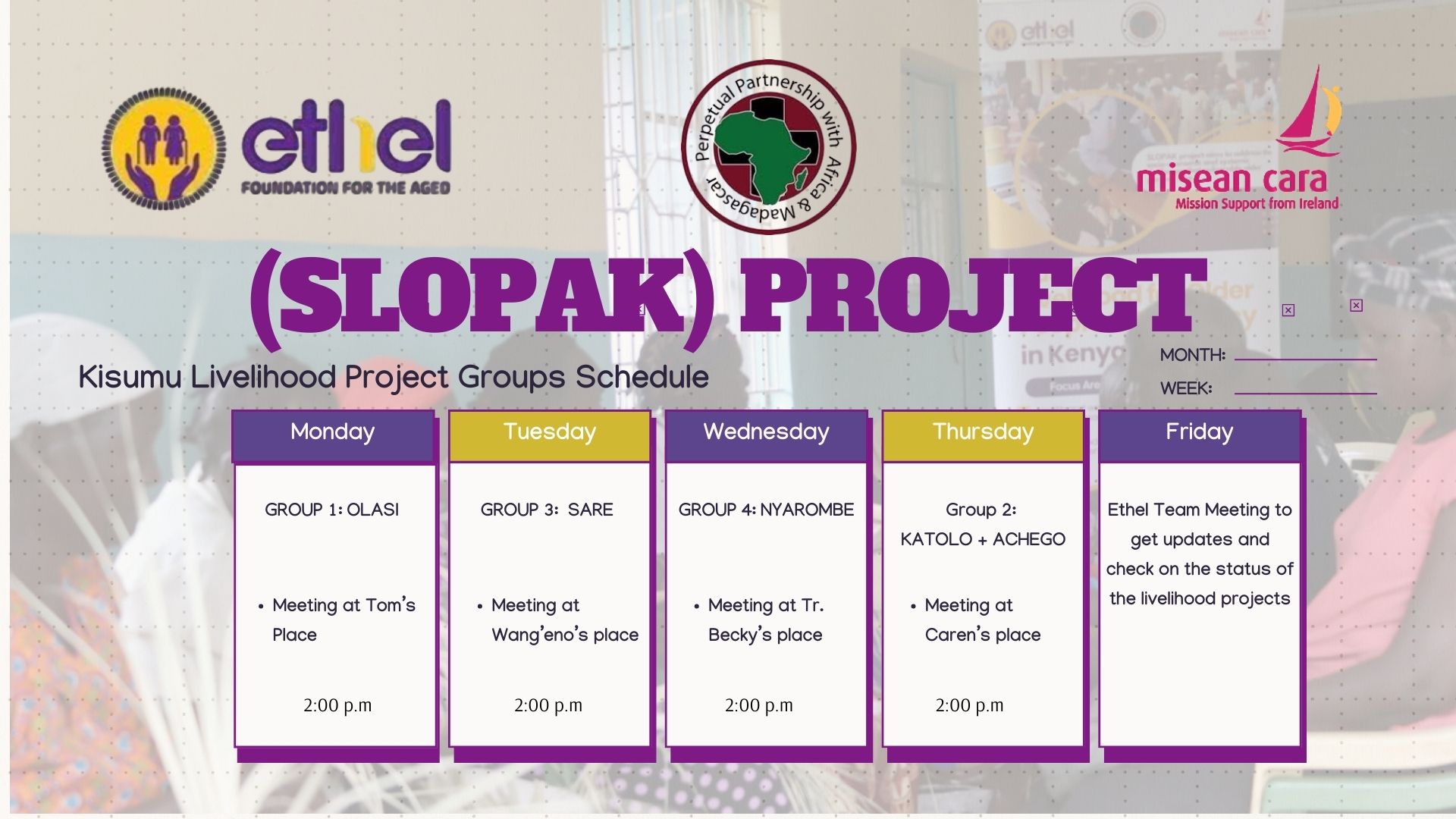
The colorful schedule, shared outlines weekly meetings for older persons’ groups, ensuring regular skill-building sessions at accessible venues:
- Monday: Group 1 (OLASI + Group 1) – 2:00 PM
- Tuesday: Group 3 (SARE) – 2:00 PM
- Wednesday: Group 4 (NYAROMBE) – 2:00 PM
- Thursday: Group 2 (KATOLO + ACHEGO) – 2:00 PM
These gatherings focus on practical livelihood training, such as handicrafts, and financial literacy—tailored to Kisumu’s lakeside economy and local markets. Groups rotate check-ins on project status, enabling peer accountability and adaptation to challenges. This scalable group model can be replicated across Kiambu, Nairobi, and other counties, integrating with Kenya’s Cash Transfer for the Elderly (CT-EL) program for holistic support.
Proven Benefits of Older Persons’ Group Meetings
Evidence from similar interventions, like Kenya’s Older Persons Cash Transfer Impact Evaluation (2019) and FAO’s community group models in East Africa, shows group meetings yield multifaceted gains:
- Economic Empowerment: Participants gain skills for income generation; one Kisumu pilot group reported 25% average income rise through collective vegetable sales after six months.
- Mental Resilience and Social Cohesion: Regular interactions combat isolation, reducing depression rates by up to 40% (per WHO Ageing and Health studies adapted to African contexts). Elders share stories, reducing stigma around ageing.
- Knowledge Exchange and Innovation: Peer teaching accelerates learning—e.g., sharing drought-resistant crop techniques suited to Lake Victoria Basin.
- Health and Wellbeing Boost: Groups incorporate light physical activities and nutrition education, aligning with UN Decade of Healthy Ageing (2021–2030).
- Community Leadership: Elders mentor youth, bridging generations and strengthening social protection systems.
A case study from Tanzania’s VICOBA (Village Community-Owned Savings and Loans) groups for seniors mirrors SLOPAK: after two years, 70% of participants achieved financial independence, with lower healthcare costs due to improved social support.
Scaling SLOPAK: A Call for Partnerships
Ethel Foundation for the Aged envisions expanding this to more groups county-wide by partnering with county governments, saccos, and agribusiness firms. By institutionalizing such schedules, we build resilient systems rooted in African communalism—where elders are assets, not burdens.
Join us in Kisumu or support replication in your community. Email us at: info@ethelfoundation.or.ke to learn more.